
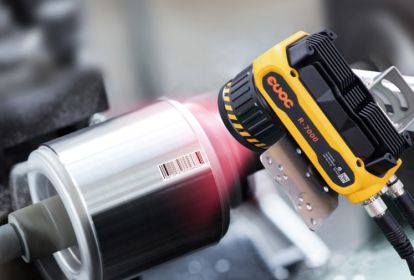
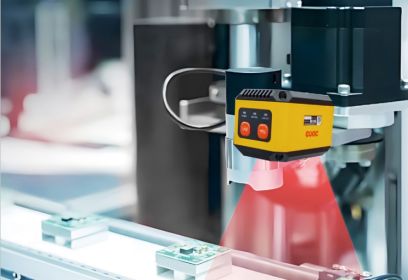
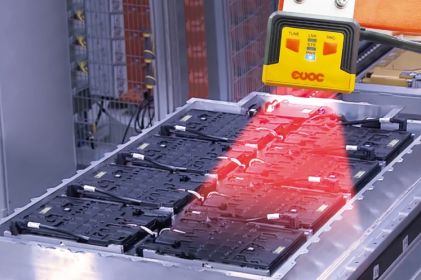
In the lithium battery industry, barcode reading typically refers to scanning QR codes or barcodes on battery cells. This process retrieves critical information including battery identification, production dates, and batch numbers, enabling product traceability and quality control. Industrial-grade barcode readers are employed to meet complex environmental demands and high-precision requirements. Common scanning methods include laser scanning and image recognition. Laser scanners achieve fast, accurate code reading, while vision-based readers utilize image analysis for higher precision decoding. With the rapid advancement of lithium battery technology, barcode reading has become widely adopted. On production lines, readers verify unique battery identifiers, ensuring traceability for quality assurance. The technology also enables full supply chain tracking—from raw materials to end consumers—enhancing product reliability through comprehensive data recording. As a critical industrial application, barcode reading technology: Ensures product traceability (ISO 9001 compliance) Enhances quality monitoring (IEC 62133 standards) Boosts production efficiency (30% faster than manual checks) Improves product quality (<0.01% misidentification rate)
Key Requirements for Barcode Reading in Lithium Battery Applications:
1.Quality Control
Scan QR/barcodes to verify battery ID production date and batch info
Enables early defect detection
2.Production Traceability
Unique codes track each battery's manufacturing data
Rapid root cause analysis for issues
3.Logistics Management
Real-time tracking of battery location/status
Improves shipping accuracy
4.Data Analytics
Collects production/sales data for business insights
5.Efficiency Boost
Automated scanning reduces errors
Cuts costs increases throughput
Industry Background:
With the advancement of the Belt and Road Initiative, China has signed over 200 cooperation documents with 152 countries and 32 international organizations for joint development. The rapid growth of the Belt and Road Initiative has brought both opportunities and challenges to the global economy.
Due to variations in barcode reading capabilities among code reader products from different countries, it has become crucial to standardize and unify barcode grading standards to prevent exported goods from being unreadable.
Barcode Reading Challenges:
1.There are differences in the barcode background and symbology on battery cells;
2.It needs to be compatible with barcodes that may be used internationally;
3.It can accurately determine barcode grades
Solution Advantages:
1.AI decoding algorithm with self-adaptive adjustment capability to effortlessly handle various barcode types;
2.Supports all mainstream international barcode standards, featuring OTA online upgrade system for future compatibility with unknown barcode formats;
3.Incorporates highly stable barcode grading algorithm for precise quality assessment.
Solution Preformance
1.The R-6000 Series is equipped with proprietary AI algorithms that automatically adapt to different barcode types, having been tested on over 14 symbologies.
2.The R-6000 Series has successfully read 9 distinct barcode types from customer applications, with accurate barcode grade determination in all cases.
3.In multi-barcode grade repeatability tests, the series achieved a 99.8% repeat accura

 4000-697-797
 518057
 jmsales@qevoc.cn
 EVOC Technology Building No. 31 Gaoxin Middle Fourth Road Nanshan District Shenzhen
二维码



 粤公网安备 44030502007980号