
Box packaging is one of the primary packaging formats in the food and beverage industry, with paper-based and plastic packaging materials occupying the largest market share and covering the widest range of products. Among box packaging materials, paperboard boxes are characterized by their lightweight properties, excellent printability, and high recyclability, commonly used for dry goods, cereals, biscuits, and milk products. Plastic box packaging, owing to its durability and diverse appearances, is frequently employed for fruits, vegetables, frozen foods, and similar products. Different types of plastics, such as polyethylene (PE), polypropylene (PP), and polyethylene terephthalate (PET), are utilized for various product categories.
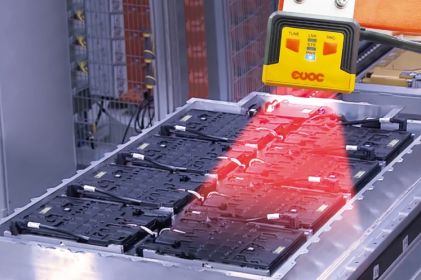
Barcode scanning requirements for various process stages in boxed product production including raw material handling filling and forming baking cooling packaging and warehousing
Process Flow:
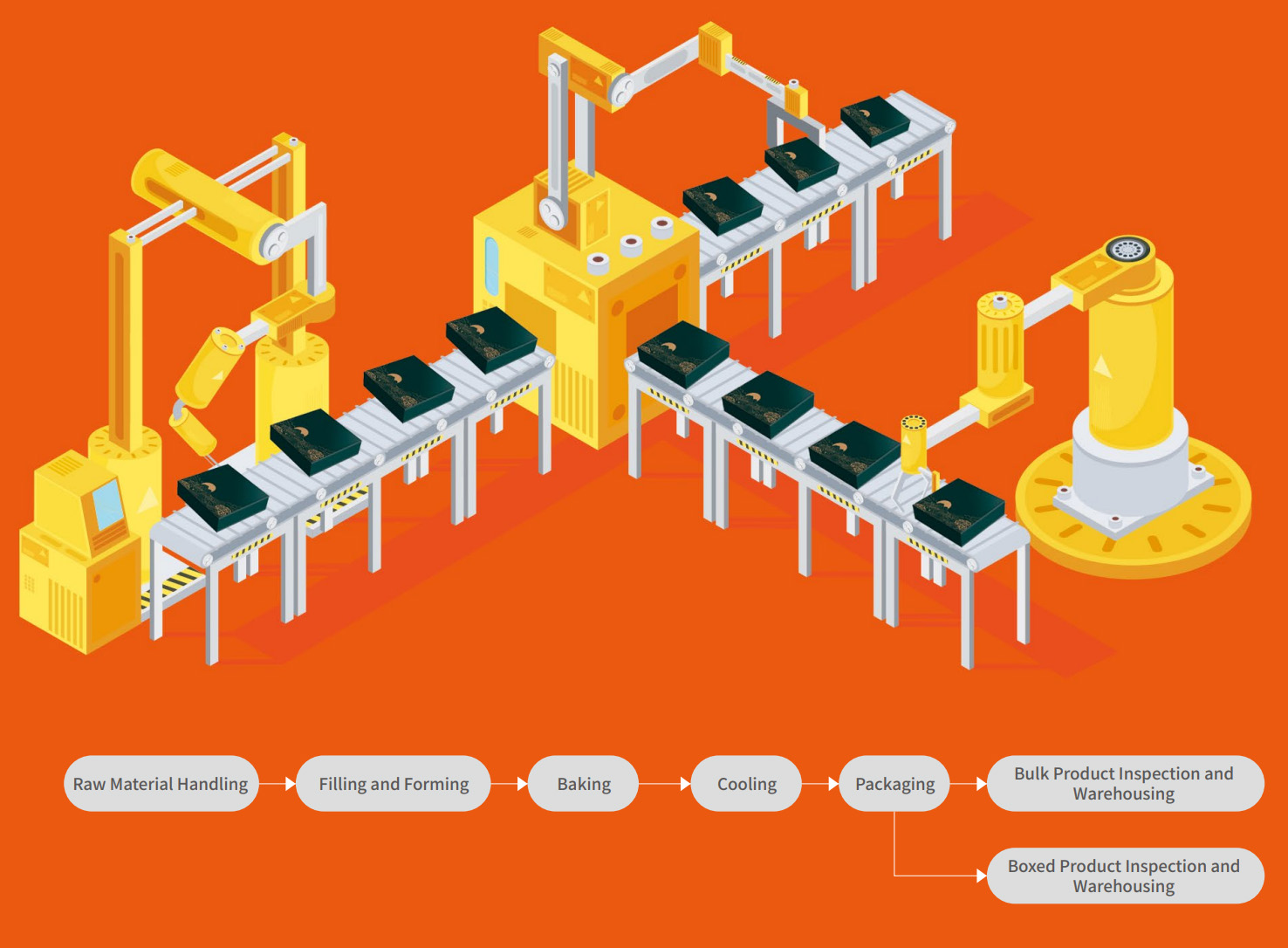
Product Analysis:
Box packaging products primarily use paper boxes and composite material packaging, with barcodes and QR codes typically located on the sides of the product packaging, making scanning relatively straightforward.
Industry Challenges:
1.Irregular Packaging Surface: Packaging quality issues may cause difficulties for barcode readers in scanning barcodes or QR codes. The packaging may suffer from compression or deformation, thereby interfering with the scanning accuracy.
2.High-speed production lines: On high-speed production lines, barcode readers must achieve rapid scanning of barcodes and QR codes within extremely short time intervals.
3.Ambient light-induced packaging surface reflection: In actual production, packaging surfaces may reflect ambient light, resulting in glare that compromises scanning reliability.
4. Contamination and damage: Dirt, scratches, or damage on packaging may interfere with code scanning.
5. Non-fixed code positioning: Due to rapid product iterations, packaging layouts may undergo changes, resulting in variable code locations.
6. Multi-code reading: In certain scenarios, multiple products on the production line may cluster together during downstream flow, requiring barcode readers with multi-code scanning capability.
Solution:
1. For low-quality codes: The intelligent AI decoding algorithm can still achieve recognition and reading for such barcodes and QR codes. In Evoc Reader, the scanning score can be displayed, allowing optimization of printing quality based on the score.
2. Multi-surface reading: For multi-surface scanning requirements, the setup position and quantity of barcode readers can be adjusted according to actual production conditions. The networking function ensures reliability when multiple readers operate simultaneously for scanning.
Barcode Reader Recommendation:
For wide-field applications, the R-6000 series barcode readers deliver high scanning efficiency, strong versatility, and an extended field of view. With exceptional multi-code reading capabilities, they meet diverse production requirements. Featuring auto-focus functionality, they offer convenient commissioning and maintenance.

 4000-697-797
 518057
 jmsales@qevoc.cn
 EVOC Technology Building No. 31 Gaoxin Middle Fourth Road Nanshan District Shenzhen
二维码


 粤公网安备 44030502007980号