
Bag packaging is the most common form of packaging in the food and beverage industry. The primary materials used for bag packaging include plastic, paper, composite materials, and biodegradable materials. Plastic bag packaging is one of the most prent packaging materials in the food and beverage sector, primarily used for products such as snacks, frozen foods, vegetables, meat, and pasta. Paper packaging bags are typically employed for items like pastries, milk, gifts, and certain confectionery products. Composite bags combine the advantages of paper and plastic materials and are commonly used for packaging coffee, nuts, and other goods.
Achieve code reading requirements in all processes of bagged product production including raw material processing food manufacturing packaging and sealing quality inspection storage and distribution enabling quality control and problem tracing in each stage
Procduct Analysis:
Bagged products come in various styles with barcodes and QR codes located in different positions.
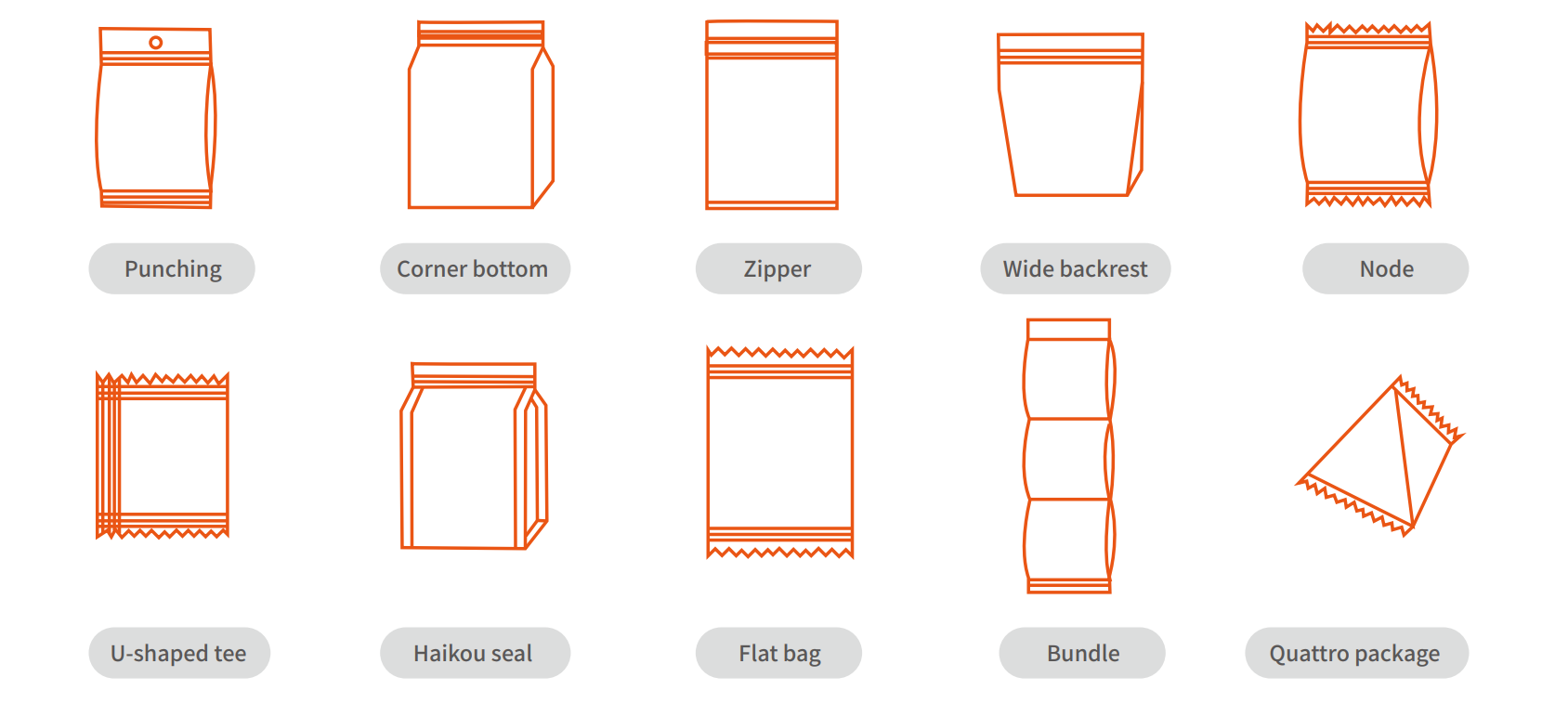
Industry Challenges:
1. Diversity of packaging materials: Bag packaging comes in various material types including plastic, paper, composite materials, etc. It is necessary to consider the reflectivity and texture differences of different materials. For example: ambient light may cause surface reflection on bags, thereby affecting reading performance.
2. Packaging deformation: During production line processes, bag packaging is highly prone to deformation and other issues.
3. Contamination and damage: Bag packaging may suffer from stains, scratches, or damage during the production process.
4. Barcode/QR code quality: The printing quality of codes may affect the reading accuracy of code readers.
Solutions:
For wrinkled and damaged barcodes/QR codes, the algorithm's deep learning capabilities enable it to learn and recognize various types of barcodes and QR codes. It can adapt to different image conditions and code variations, allowing identification and reading of defects such as wrinkles and damages on packaging surface codes.
Barcode Reader Recommendation:
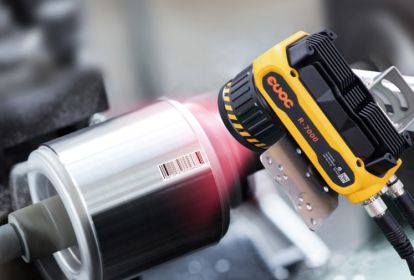
R-3000 Series Barcode Reader - Meets the frequent packaging format changes in the bagged food & beverage production industry. Supports manual focus adjustment to ensure sufficient margin for field of view and working distance. Features networking capability to guarantee reliability when multiple readers operate simultaneously. Delivers high-speed decoding performance with simple installation and commissioning.
R-6000 Series Barcode Reader - Equipped with high-resolution camera and auto-focus function, featuring large field of view and wide applicability. The modular-designed light source allows optimal illumination configuration based on on-site lighting conditions.

 4000-697-797
 518057
 jmsales@qevoc.cn
 EVOC Technology Building No. 31 Gaoxin Middle Fourth Road Nanshan District Shenzhen
QR CODE


 粤公网安备 44030502007980号